Organized Weekly Menus
The exact framework and guidelines I use to keep family dinners varied, efficient, and scratch-made.
Navigation Rules
Rule 1 – Know What Is On The Family Calendar
Before you even start planning the menu, think about your family’s week and consider what nights may be busier than usual. If you have a kid’s game, parent meeting, or deadline for a project for work that is going to impact the time you have to make dinner, then you want to keep this in mind when planning the meals. For this night, you might to do something in the slow cooker so dinner is mostly ready when you get home, something super quick, or maybe its the perfect night for leftovers. If the latter, you will want to make sure you are making enough the other nights to ensure there are options.
Rule 2 – Keep It Varied
While we have the standard staples of tacos and spaghetti that we make from time to time, we rarely make the same dishes week after week. There is absolutely nothing wrong with having a few go to meals if that works for you, but we personally enjoy mixing things up. We do have a rotation of family favorites, but most make an appearance about once a month rather than every week. This keeps meals interesting and gives us the opportunity to try new recipes without completely abandoning the tried-and-true favorites. It also helps when, as is often the case in a family, not everyone loves every dish. Rotating meals means everyone gets to enjoy their favorites without feeling like we’re making the same thing over and over again.
Rule 3 – Be Mindful of Ingredients
When I’m planning a menu, I often start by looking at the weekly ads for my go-to grocery store. What’s on sale can not only inspire a meal, but also help shape the rest of my menu. If chicken breasts are buy one, get one 50% off, for example, I might plan two meals that use them rather than buying them for just one dish. I use the same approach with produce and pantry staples. If a recipe calls for half an onion or bell pepper, or only a cup or two of chicken broth, I’ll look for another meal where I can use what’s left. Thinking about ingredients this way helps me get more value from what I buy, reduces food waste, and can make meal planning feel more intentional.
Rule 4 – Build Your Own Meal-Planning Formula
Instead of planning each week’s meals from scratch, I like to think of meal planning as building your own formula. Start with a few categories that help create variety and balance throughout the week. Maybe Sunday is reserved for a meal that takes a little more time, while another night is a pasta dish and another is built around rice. Add something lighter, something seasonal, and a family favorite or two. I also like to think about the proteins across the week so that we aren’t eating chicken night after night. The goal isn’t to follow a strict schedule, but to create a framework that makes planning easier while still leaving plenty of room for creativity and whatever sounds good that week.
My Meal-Planning Formula
- Sunday Dinner – something that takes more time
- Noodles & Pasta
- Rice & Bowls
- Family Favorites
- Fresh and Lighter Eats
- Seasonal
- Wildcard – leftover night or a trying a new recipe
Browse Current Menus
-

Weekly Menu: October 26th
Welcome to this week’s family menu rotation. We occasionally have special weeks when the menu features a particular theme, and since we love Halloween in our house , we are embracing it with some of our favorite Halloween-themed dinners. Even during a themed week, I still follow my Meal-Planning Formula. As usual, this week’s layout starts on Sunday with a more time consuming, scratch-made dinner and moves through a balanced mix of dishes designed to provide variety, use what is in season, and keep the family happy.
The Navigation Plan for this Week
- The Calendar (Rule 1) – As mentioned above, this week includes some of our favorite Halloween-themed dinners. One is our family-favorite turkey chili recipe which I am making extra festive by serving it alongside hot dog mummies. I am saving this meal for Halloween night so my kids can enjoy something hearty and nutritious before heading out with friends.
- Keeping it Varied (Rule 2) – Even though we are embracing Halloween this week, I am still mixing in meals from our regular rotation to keep the menu balanced. Monster meatloaf, bats and cobwebs pasta, and turkey chili with hot dog mummies bring plenty of Halloween fun to the dinner table, while simple tacos, beef and broccoli, and a pizza night round out the week with familiar, easy options. This way, we can enjoy the holiday throughout the week without every dinner a themed event or adding extra work to an already busy schedule.
The Formula-Driven 7-Day Menu
- Sunday (Formula: Sunday Dinner)
- Dinner: Monster Meatloaf with roasted carrots and smashed potatoes
- Navigator Note: This meatloaf is as fun and frightful as it is tasty! While the preparation is pretty straightforward, it does take some time in the oven, making it a perfect dinner for Sunday night.
- Recipe Status: Full Recipe Card Available!
- Monday (Formula: Noodles & Pasta)
- Dinner: Bats and Cobwebs Pasta with simple Caesar salad
- Navigator Note: This pasta recipe is usually only made once a year, but honestly, it’s so good that I could easily add it to our regular rotation! The sauce comes together with just a few ingredients before being combined with noodles, cheese, and chicken sausage and finished in the oven for a comforting, flavorful dinner.
- Recipe Status: Full Recipe Card Available!
- Tuesday (Formula: Family Favorite)
- Dinner: Carne Asada and Polo Asado Tacos
- Navigator Note: Sprouts, our go-to grocery store, sells delicious and convenient pre-marinated carne asada and pollo asado. We grill both meats and serve them with a variety of toppings, along with simple beans and rice, for an easy and flavorful dinner.
- Wednesday (Formula: Rice & Bowls )
- Dinner: Beef and Broccoli
- Navigator Note: This is my go-to recipe for beef and broccoli! Natasha’s Kitchen has a great version that I love making at home when we’re craving takeout-inspired flavors.
- Recipe Status: Full Recipe Available at Natash’a Kitchen
- Thursday (Formula: Leftovers)
- Dinner: Mix and match any remaining items from the previous dinners
- Navigator Note: Leftover night is an easy way to use up meals from earlier in the week. It keeps dinner simple on a busy night while making the most of the meals we’ve already prepared.
- Friday (Formula: Wildcard – Dinner out)
- Dinner: Pizza Night
- Navigator Note: After a busy week, Friday is the perfect night to take a break from cooking. I’m planning ahead to order or pick up pizza for an easy dinner that lets us kick off the weekend with minimal effort.
- Saturday (Formal: Family Favorites; Seasonal)
- Dinner: Cincinnati Chili with Mummy Hot Dogs
- Navigator Note: A warm, seasonal chili that is perfect for a hearty and nutritious dinner before heading out trick-or-treating. Hot dogs wrapped in puff pastry add a fun, festive touch that makes the meal extra special for Halloween.
- Recipe Status: Full Recipe Card Available!
Baking Treat: Halloween Sugar Cookies!
No Halloween week is complete without something sweet! These Halloween Sugar Cookies are a fun, festive treat to enjoy throughout the week.
-
Weekly Menu: October 11th
Welcome to this week’s family menu rotation. Following my Meal-Planning Formula, this week’s layout starts on Sunday with a more time consuming, scratch-made dinner and moves through a balanced mix of dishes designed to provide variety, use what is in season, and keep the family happy.
The Navigation Plan for this Week
- The Calendar (Rule 1) – This week is a bit of a mix when it comes to activities. My son has a game on Tuesday so I am starting the week off with bigger, heartier dishes that we will provide leftovers for an easy dinner and possibly a few lunches. We also have appointments later in the week so I am planning simpler dinner to make getting food on the table less stressful. And on Friday night, we are going to treat ourselves to dinner out somewhere everyone enjoys.
- Keeping it Varied (Rule 2) – This week’s menu brings together a variety of cuisines, proteins, and cooking styles to keep dinner interesting throughout the week. From a slow-simmered Sunday Bolognese and family-favorite butter chicken to quick burritos, fresh shakshuka, and a seasonal pork chop dinner, each night offers something a little different.
The Formula-Driven 7-Day Menu
- Sunday (Formula: Sunday Dinner; Noodles & Pasta)
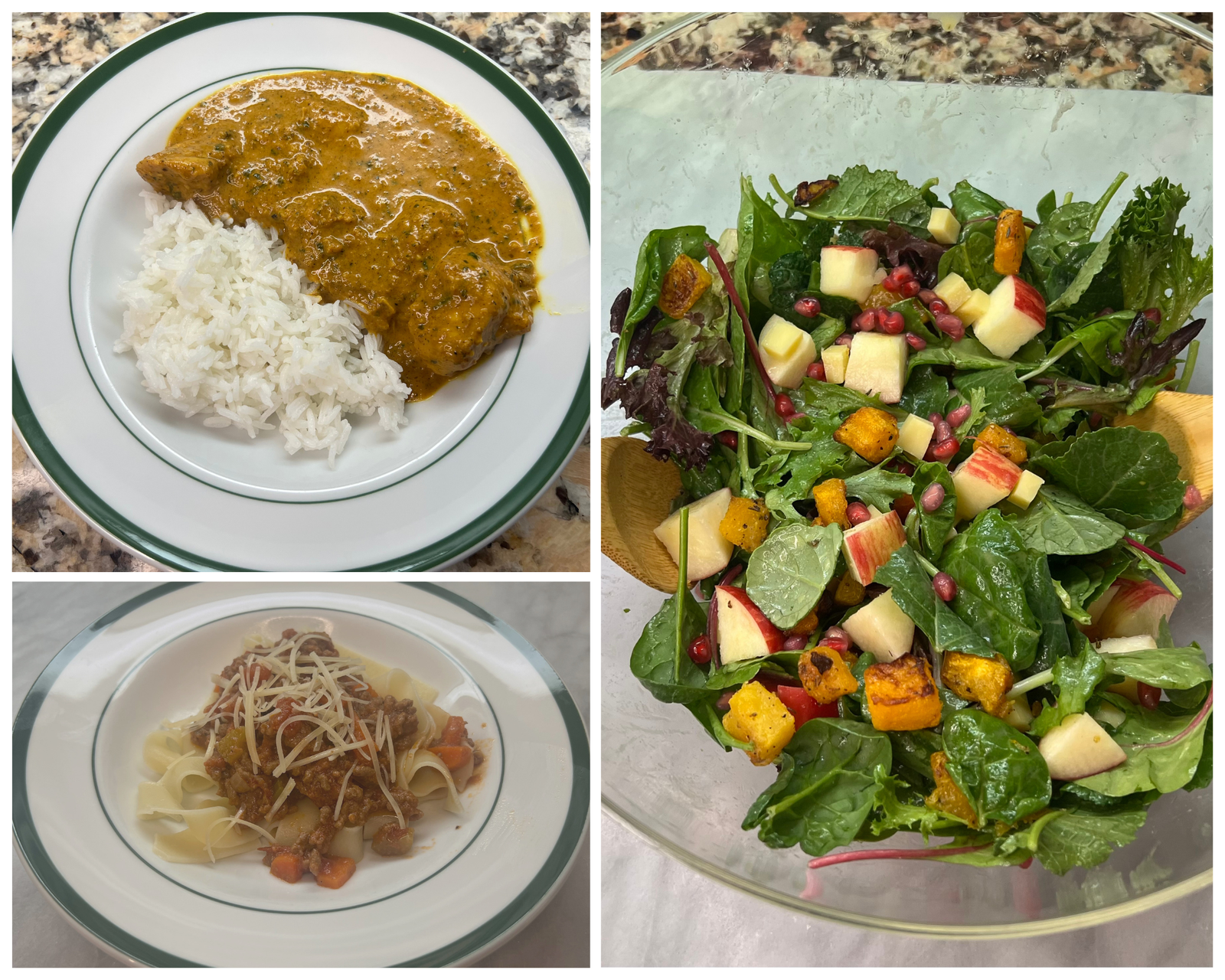
- Dinner: Bolognese
- Navigator Note: A time-consuming dish that is worth the extra effort. Once the sauce has reached its final, long simmer, it requires much less attention, making this a great choice for a Sunday dinner.
- Recipe Status: Full Recipe Card Available!
- Monday (Formula: Family Favorites; Rice & Bowls)
- Dinner: Butter Chicken (adapted from Gordan Ramsey’ s Curry in a Hurry)
- Navigator Note: Butter chicken is a family favorite in our house. This big batch adaptation ensures that we have leftovers to enjoy throughout the week.
- Recipe Status: Full Recipe Card Coming Soon!
- Tuesday (Formula: Leftovers)
- Dinner: Mix and match any remaining items from the previous dinners
- Navigator Note: Strategically placed on a busy night, leftover night gives us a easy dinner while also making sure we’re putting the first two meals to good use.
- Wednesday (Formula: Rice & Bowls)
- Dinner: Chicken Black Bean Burritos and Spanish Rice
- Navigator Note: Utilizing rotisserie chicken and canned black beans as the base makes these burritos quick to assemble. Homemade Spanish rice isn’t essential, but it adds a little something extra and makes the meal feel more complete.
- Recipe Status: Full Recipe Card Coming Soon!
- Thursday (Formula: Fresh and Lighter Eats)
- Dinner: Shakshuka
- Navigator Note: A quick an easy dinner that tastes like it takes more time that it does. Using eggs as the protein also means I can buy the ingredients earlier in the week without worrying about fresh meat needing to be used right away.
- Recipe Status: Full Recipe Card Coming Soon!
- Friday (Formula: Wildcard – Dinner out)
- Dinner: Dinner out
- Navigator Note: This week is especially busy so building in flexibility to pick up or eat out at somewhere easy and fun. Perfect for a long week.
- Saturday (Formal: Seasonal)
- Dinner: Pork Chops and Harvest Salad
- Navigator Note: A seasonal dinner is a great way to round out the week, bringing a fresh, fall-inspired meal to the table after a busy few days.
- Recipe Status: Full Recipe Card Coming Soon!
-

Weekly Menu: October 4th
Welcome to this week’s family menu rotation. Following my Meal-Planning Formula, this week’s layout starts on Sunday with a more time consuming, scratch-made dinner and moves through a balanced mix of dishes designed to provide variety, use what is in season, and keep the family happy.
The Navigation Plan for this Week
- The Calendar (Rule 1) – My Monday is filled with meetings so I know I won’t want to come home and cook something super involved. I will plan for a dinner that is fairly easy and simple to get on the table. Thursday night my son has a game so we will make this leftover night. I’ll make sure that a few of the earlier planned dishes will leave plenty to spare. The weather is expected to heat up over the weekend so I’ll save some warmer-weather friendly dishes for later in the week.
- The Grocery Angle (Rule 3) – End-of-summer and early-fall produce seems to be on sale and in abundance at the grocery store right now. I’ll make sure to take advantage of this by building a few produce heavy dishes into the menu.
The Formula-Driven 7-Day Menu
- Sunday (Formula: Sunday Dinner)
- Dinner: French Onion Chicken served with mashed potatoes and sautéed or grilled green beans
- Navigator Note: A comforting dish that is worth the extra time. The chicken requires quite a bit of attention, so keeping the side dishes simple and complementary is key.
- 🕒 Recipe Status: Full Recipe Card Available!
- Monday (Formula: Noodles & Pasta)
- Dinner: Brussel Sprout Pasta
- Navigator Note: Shaved brussels sprouts cook up quickly and don’t take long to prep, especially when using a food processor. Some stores also sell them already shredded saving you even more time. Using a vegetable as the basis of your pasta makes this a satisfying, complete meal.
- 🕒 Recipe Status: Full Recipe Card Available!
- Tuesday (Formula: Seasonal)
- Dinner: Pork and Apples with roasted carrots and rice pilaf
- Navigator Note: Cutting a pork tenderloin into medallions creates a blank canvas for spices and works perfectly with a quick apple compote. Event better, the pork cooks beautifully in just minutes, making this a great way to bring seasonal flavors to a weeknight dinner.
- 🕒 Recipe Status: Full Recipe Card Available!
- Wednesday (Formula: Rice & Bowls)
- Dinner: Soy Marinated Chicken Thighs with Spam Fried Rice
- Navigator Note: Marinating chicken the night before means I can focus my attention on making the fried rice at dinnertime. The marinade creates a flavorful chicken that perfectly balances the savory fried rice.
- 🕒 Recipe Status: Full Recipe Card Available!
- Thursday (Formula: Leftovers)
- Dinner: Mix and match any remaining items from the previous dinners
- Navigator Note: Strategically placed on a busy night, leftover night gives us a easy dinner while also making sure we’re putting the week’s meals to good use.
- Friday (Formula: Fresh and Light Eats)
- Dinner: Spring Roll Salad
- Navigator Note: A crisp and light meal to wrap up the work week. If purchased earlier in the week, keep vegetables and fruits whole as much as possible to ensure they stay fresh for this dish. Using precooked chicken sausage also keeps the focus on the slicing and dicing of that makes this such a produce-friendly meal.
- 🕒 Recipe Status: Full Recipe Card Available!
- Saturday (Formal: Family Favorites)
- Dinner: Slow Cooker Pulled Pork Sandwiches with a simple side salad
- Navigator Notes: A rotating classic that everyone loves. A hands-off, heat-free dinner that tastes like it spent all day in a smoker.
- 🕒 Recipe Status: Full Recipe Card Available!
Breakfast & Baking Addition
Use up any extra bananas this week with our premier, from-scratch recipe – The Only Banana Recipe You Need